

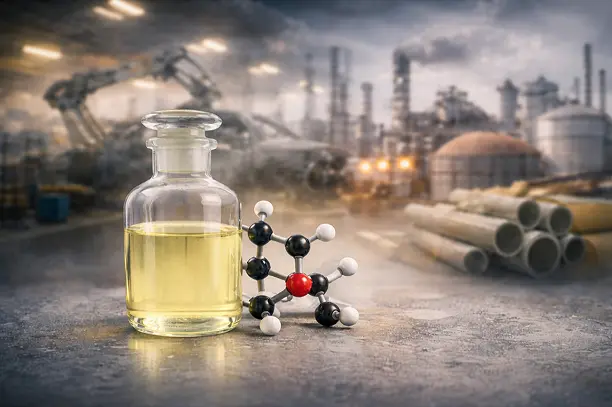
If you’ve ever worked around polyurethane foams, silicone sealants, or industrial coatings, you’ve probably encountered Dibutyl Tin Dilaurate, also known as DBTDL.
It’s one of those chemicals you don’t hear much about in everyday life, but is essential to many industrial products. DBTDL is silently present in many more places than people think, such as car seat cushions, bathroom tile sealers, etc.
But what is it, how does it work, and why is it important in manufacturing? Let’s break it down simply!
What Is Dibutyl Tin Dilaurate (DBTDL)?
Dibutyltin dilaurate is an organotin compound. It appears as a colourless to pale yellow oily liquid with a fatty acid-like smell. It is soluble in most organic solvents, such as acetone and methanol, but is practically insoluble in water.
DBTDL is a catalyst, a substance that accelerates a chemical reaction without being used up in the reaction. It is a catalyst for esterification, transesterification and polycondensation reactions, making it the catalyst of choice for coatings, adhesives, sealants, and elastomers manufacturing.
| Property | Details |
| Chemical Name | Dibutyltin Dilaurate |
| Common Abbreviations | DBTDL, DBTL, T-12 |
| CAS Number | 77-58-7 |
| Molecular Formula | C₃₂H₆₄O₄Sn |
| Appearance | Colourless to pale yellow oily liquid |
| Solubility | Soluble in acetone, methanol, and organic solvents; insoluble in water |
How Does It Work?
To lower the activation energy for the chemical reaction is the working principle of the DBTDL. It can dramatically increase the speed of polyurethane reactions and the curing efficiency. It provides a rate acceleration of 10 or more in the reaction of isocyanates and polyols to form a polyurethane system compared to the natural reaction rate.
This translates into a better urethane linkage, which directly impacts the strength, flexibility and durability of the product. Without a catalyst like DBTDL, these reactions either take too long or produce inconsistent results, both of which are costly problems in a production environment.
Key Industrial Applications Of DBTDL
DBTDL is not a single-purpose chemical. Its versatility is one of the main reasons it has remained an industry standard for decades.
1) Polyurethane Production
This is where DBTDL sees its widest use. It is used in producing hard and flexible foams, sealants, adhesives, paints, coatings, and industrial floor systems.
- In flexible foams, it controls how the foam gels, affecting density and feel, which is important for automotive seats and furniture cushioning.
- In rigid foams, it supports the structural integrity needed for insulation panels.
- In two-component (2K) coatings, it speeds up curing time, which is critical for automotive finishing and protective coatings on tanks, pipelines, and floors.
2) Silicone Rubber & Sealants
A commonly used catalyst for cold vulcanising silicone rubbers and silane-modified polymers, DBTDL is widely trusted.
In the air, moisture causes solidification of silicone, and DBTDL speeds up the process and makes it easier to process. This is crucial for RTV (room-temperature vulcanising) sealants in the construction, automotive assembly and cable industries.
3) DBTDL In XLPE Cable Compounds
DBTDL is used to crosslink polyethene/silane co-polymer systems for the wire and cable industry. In the silane crosslinking process, it acts as a condensation catalyst, accelerating the reaction between silanol groups when the material is exposed to moisture. DBTDL increases the crosslinking reaction rate considerably, resulting in higher gel content, which directly translates to better heat resistance, improved mechanical strength, and longer service life in cable insulation applications.
4) Other Applications
DBTDL’s catalytic action is also used in:
- Acrylic acid esters
- Alkyd resins
- Silica esters
Benefits Of Using DBTDL
Several ways to improve efficiency, reduce defects, and maintain product quality are under consideration by manufacturers across the industry. DBTDL addresses all of these challenges in one compound.
So why do so many industries keep coming back to DBTDL when other catalysts are available? The answer comes down to a combination of performance, flexibility, and reliability.
DBTDL does more than just speed up reactions. Its value in industrial manufacturing goes well beyond that. Here is a breakdown:
| Benefit | What It Means in Practice |
| High catalytic activity | Small doses deliver significant reaction acceleration |
| Versatility | Effective across polyurethane, silicone, PVC, polyester, and more |
| Dual functionality | Works as both a catalyst and a heat/UV stabiliser |
| Better product quality | Consistent curing leads to uniform mechanical properties |
| Easy to formulate | Soluble in most organic solvents used in industrial systems |
| Process control | Allows fine-tuning of gel time and curing speed |
Where Does It Make The Biggest Difference?
The applications of DBTDL in automotive manufacturing include use in seat foam, dashboard coatings, underbody sealants, and wire insulation. For high-volume production lines, fast, consistent curing is essential, and DBTDL delivers it.
In construction, it enables silicone sealants that can survive years of weather exposure, temperature swings, and mechanical stress around windows, facades, and structural joints.
These two industries are among many that show the extraordinary extent to which industry relies on this single compound to function properly.
Safety And Handling
DBTDL is effective, but it must be handled responsibly. As an organotin compound, it carries toxicity concerns and has attracted regulatory attention due to its persistence in the environment.
Key Handling Guidelines:
- Always store in sealed containers away from heat and open flames
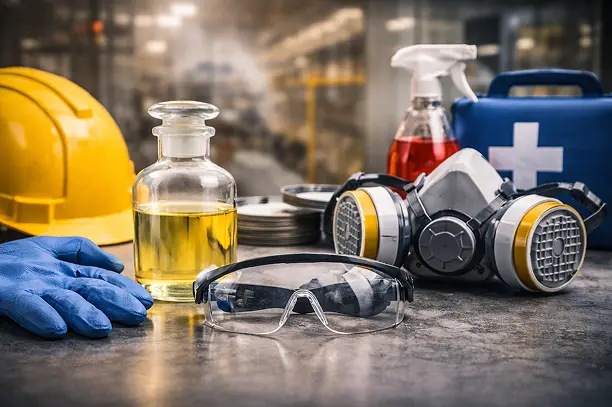
- Use proper PPE, gloves, safety goggles, and protective clothing
- Work in well-ventilated areas at all times
- Dispose of waste according to local environmental regulations
- Prevent any contact with water systems or soil
- When stored correctly, DBTDL retains full quality for a minimum of 6 months
The chemical industry has been developing alternative catalysts to reduce environmental impact, and regulations on DBTDL use and disposal continue to tighten globally. Responsible use is not optional; it is a requirement.
Why DBTDL Still Matters?
Despite the push toward greener chemistry, DBTDL remains firmly relevant in industrial manufacturing. Its proven performance, wide compatibility, and cost-effectiveness make it difficult to replace in many critical applications. Alternatives exist, but in industries where product consistency and production speed are non-negotiable, DBTDL remains the trusted choice.
The path forward is likely a balanced one, using DBTDL where it performs best while exploring safer alternatives for lower-risk applications as the industry evolves.
Final Thoughts
Dibutyl Tin Dilaurate is a master-worker in industrial chemistry. It aids in the setting of polyurethane foams, assures reliable cure of silicone sealants, prevents degradation of PVC, and is a component in the manufacture of many products in modern life.
For any manufacturer involved in coatings, adhesives, construction or automotive applications, knowledge of DBTDL and sourcing from a trusted supplier is key to product quality and production flow.
Looking for a Reliable DBTDL Supplier? SV Plastochem provides high-performance chemical solutions, including industry-grade Dibutyl Tin Dilaurate, for manufacturers across India. Visit the Website Today!
FAQs
Q1. What Is DBTDL Used For?
DBTDL is used as a catalyst in polyurethane foams, silicone sealants, polyester resins, and industrial coatings. It speeds up key chemical reactions, helping manufacturers achieve faster curing and consistent product quality. It also doubles as a heat and UV stabiliser in PVC products like pipes, cables, and window profiles.
Q2. What Does DBTDL Stand For?
DBTDL stands for Dibutyltin Dilaurate, an organotin compound with CAS number 77-58-7 and molecular formula C₃₂H₆₄O₄Sn. It is also known as DBTL or T-12 in industrial contexts. The compound is a pale yellow oily liquid that is soluble in most organic solvents, making it easy to use in various formulations.
Q3. Is DBTDL Hazardous?
DBTDL is an organotin compound and does carry toxicity concerns, so it must be handled carefully. Workers should use proper PPE, including gloves and safety goggles, and ensure workspaces are well ventilated. Waste disposal must follow local environmental regulations to prevent harm to soil and water systems.
Q4. Which Industries Use DBTDL?
DBTDL is used across automotive, construction, textiles, packaging, coatings, adhesives, XLPE cable compound production, and speciality chemicals industries. Its versatility as both a catalyst and stabiliser makes it valuable in high-volume industrial production as well as precision chemical manufacturing. Few single compounds effectively cover such a wide range of applications.
Q5. Can Other Catalysts Replace DBTDL?
Greener alternatives are being researched, but DBTDL remains the preferred choice in many critical manufacturing applications. Its high catalytic activity, broad compatibility, and decades of proven performance make it hard to substitute without affecting quality or process efficiency. It remains the industry standard for polyurethane, silicone, and PVC manufacturing.