

Someone has said it right: “Old is Gold”. And, this saying applies very well to the one of the most effective and versatile organotin catalyst as it has been serving the industrial organic chemistry since five decades.
Due to its extraordinary Lewis Acid activity in esterification, transesterification, and polycondensation reactions , it has taken the central stage in the production of polyesters, alkyd resins, and methacrylate esters.
In this article, we discuss what role does DBTO play in various reactions. To learn more, lets dive into the article right away!
What is Dibutyl Tin Oxide (DBTO)?
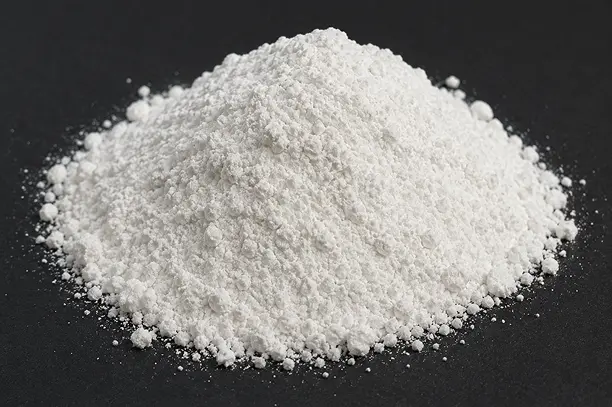
Dibutyl Tin Oxide is an organotin compound with a molecular formula (C₄H₉)₂SnO. Its molecular weight is 248.93 g/mol. This white, odourless powder is insoluble in water, but dissolves well in organice acids and alcohols at high temperatures.
The Tin (IV) centre shows Lewis acid cahracter, imparting it catalytic property. The compound’s distorted tetrahedral geometry around tin allows coordination with carbonyl oxygen, activating the acyl group towards nucleophilic attack by alcohols. Owing to this mechanism, DBTO can be broadly applied for esterification and polycondensation reaction.
Summary Table
| Property | Value | Significance |
| Molecular Formula | (C₄H₉)₂SnO | Dibutyl-substituted tin(IV) oxide |
| CAS Number | 818-08-6 | Regulatory identity for REACH/SDS |
| Molecular Weight | 248.93 g/mol | Batch dosing calculation reference |
| Melting Point | ~300°C (decomposes) | Thermally stable under process conditions |
| Appearance | White crystalline powder | Easily dispersed in reaction medium |
| Solubility in Water | Practically insoluble | Minimal hydrolysis risk under process conditions |
| Solubility in Acids/Alcohols | Soluble above ~100°C | Homogeneous catalyst distribution achievable |
| Sn Content (nominal) | ~47.7 wt% | Active site density reference |
| Industrial Purity | >98% | Low impurity profile for specialty grades |
How DBTO is better than other alternatives?
DBTO has been dominating in the polycondensation and esterification reaction for three main characteristics:
1) High Lewis acidity: It requires low amounts of catalyst (typically 0.01 to 0.3 wt% on substrate),
2) Thermal stability: DBTO is thermally stable up to 250°C without undergoing significant decomposition
3) Compatibility: It is compatibility with various substrates including fatty acids, dicarboxylic acids, diols, and hydroxy-functional methacrylates.
Mechanism of Catalytic Action:
The catalytic mechanism of DBTO proceeds via Lewis acid activation. As the tin(IV) centre coordinates with the carbonyl oxygen of the carboxylic acid substrate, it increases electrophilicity at the carbonyl carbon and lowers the energy barrier for nucleophilic alcohol attack. This accounts for DBTO‘s acceleration of both direct esterification and transesterification reactions.
With Carboxylic Acids or Esters, DBTO reacts first in situ to form a dibutylin intermediate. This intermediate then facilitates the transesterification reaction via a cyclic transition state, explaining the high chemoselectivity observed in a DBTO-catalysed reaction.
And, unlike Bronsted acid catalysts (H₂SO₄, p-TsOH) that promote competing elimination, dehydration, and colour-forming reactions, DBTO delivers clean esterification and transesterification with minimal side products.
Applications of DBTO
-
Esterification Reactions
DBTO proves to be highly effective for a simple ester synthesis from carboxylic acids and alcohols, especially where classical acid catalysis struggles with selectivity limitations. Long-chain fatty acid esters, that used as lubricants, plasticisers, and fragrance intermediates are manufactured with DBTO catalyst at loadings of 0.05 to 0.2 wt% at 150 to 200°C.
| Key Advantages of DBTO in Esterification |
| High chemoselectivity: suppresses di- and tri-ester over-reaction in mono-esterification |
| Low acid-value products achievable: final acid values <2 mg KOH/g routinely obtained |
| Colourless to pale products: no colour bodies from acid-catalysed side reactions |
| Mild temperature profile (150-200°C): compatible with heat-sensitive substrates |
| Recyclable in solvent-free systems: tin species retained in product phase in many applications |
-
Polyester Synthesis
-
Saturated Polyester Resins
One of the most important commercial applications of DBTO catalyst includes production of Saturated polyester resins. These resins are required for powder coatings, can coatings, and high-solids solventborne coatings. The Saturated Polyester resins are made by melting polycondensation of diols like neopentyl glycol, ethylene glycol, 1,6-hexanediol with dicarboxylic acids such as isophthalic acid, adipic acid, terephthalic acid at 200 to 240°C under vacuum.
DBTO is employed at 0.03 to 0.15 wt% on the total monomer charge. DBTO delivers the lowest final acid value (1.8 mg KOH/g), lowest colour (Gardner <1), and highest Mn (5,800 g/mol) when compared to all the alternative catalysts tested at equivalent loading.
-
Unsaturated Polyester Resins (UPR)
An Unsaturated polyester resin (UPR) is a critical matrix polymer for fibre-reinforced composites in marine, construction, and automotive sectors. In presence of DBTO, it prevents the conversion of maleate-to-fumarate isomerisation, thus minimizing loss while accelerating the reaction speed.
3) Alkyd Resin Manufacture
Alkyd resin is a polyester-based binder derived from polyols, polycarboxylic acids, and drying or non-drying oils. Alkyd Resins represent the largest segment of the global decorative and industrial coatings market with a market size of USD 7.2 billion in 2023.
In order to synthesize the Alkyd Resin, you need a catalyst that can resist color development from fatty acids, balance competing esterification, and also control molecular weight build-up to achieve the desired viscocity.
4) Methacrylate Ester Synthesis
Methacrylate esters are important monomers for acrylic polymers, contact lenses, dental materials, photoresists, and specialty coatings. Since the DBTO catalyst operates at temperatures between 90°C and 130°C, it reduces the risk of premature polymerisation of the methacrylate double bond. It allows transesterification of methyl methacrylate (MMA) with higher alcohols to produce specialty methaacrylate esters.
Other Specialty Applications of DBTO
-
Silicone Condensation and RTV Sealants
The Tin Catalyst- DBTO, is a key catalyst in silicone condensation curing systems, specifically for Room Temperature Vulcanisation silicone sealants and elastomers. Since DBTO is a Lewis Acid, it activates silanol groups (Si-OH) toward condensation with alkoysilane crosslinkers, producing Siloxane (Si-O-Si) bonds and releasing alcohol
-
Polyurethane-Modified Alkyd Systems
In polyurethane chemistry, DBTO acts as a controlled gelling catalyst during the urethane formation in polyurethane-modified alkyd coatings. Unlike DBTDL, DBTO‘s slower initial activation allows extended pot life in two-component ambient-cure industrial coating formulations, making it preferred for topcoat and high-build applications.
SV Plastochem: Your Trusted Partner
SVP is a leading manufacturer of tin-based stabilisers, catalysts and compounds in India. We offer our products to more than 25 countries. We have a wide portfolio, comprising of tin compounds, esterification catalysts, and metallic stearates.
Besides products, what makes us stand out from the crowd is the legacy of technical expertise. We prioritise quality, innovation, and relibility in the chemical industry.
To find out more about DBTO, check this link to the product page on our website: https://svplastochem.com/tin-catalyst/
FAQs
1) Can DBTO be used in methacrylate systems without premature polymerisation risk?
DBTO is fully compatible with standard polymerisation inhibitors used in methacrylate ester synthesis, including MEHQ, phenothiazine, and BHT. Unlike Bronsted acids, DBTO does not degrade these inhibitors, allowing safe esterification at 90 to 130°C. Maintaining oxygen sparging alongside inhibitor use further enhances protection during DBTO-catalysed MMA transesterification operations.
2) How does DBTO compare to DBTDL for polyester synthesis?
DBTO and DBTDL (dibutyltin dilaurate) have different activity profiles. DBTO is a latent catalyst, activating only above approximately 140°C as it dissolves in the reaction medium, providing better pot life in two-component systems. DBTDL is immediately active from ambient temperature. For high-temperature polycondensation above 180°C, DBTO is generally preferred for superior colour (Gardner <1) and lower final acid values.
3) Where do I buy DBTO?
SV Plastochem is the best trusted industry partner to buy DBTO for your reactions. For more information, reach out to us today.