

You may rarely pause to think about the food packaging you pick up at a supermarket, yet it quietly performs one of the most essential jobs, protecting the food it carries. Packaging is not just a wrapper; it is the silent guardian of freshness, shelf-life, and safety.
Because of this critical responsibility, food-contact PVC has become a highly specialised and essential segment within the polymer manufacturing industry, commanding precise formulation and meticulous processing control.
From flexible food packaging and pharmaceutical blister films to medical-grade tubing and IV bags, the tolerance for error is practically zero. The PVC used must withstand high processing temperatures, remain optically clear to reassure consumers, avoid any trace of toxic residues, and comply with increasingly strict global food safety regulations.
Each of these requirements represents a complex technical challenge on its own, yet manufacturers must meet all of them simultaneously to deliver safe and high-quality products. Behind this clarity and regulatory compliance lies a far more complex manufacturing reality.
While producing food-contact PVC that checks every box, manufacturers encounter several recurring challenges, from stabiliser selection to thermal management, and from colour consistency to migration control.
In this article, we cover five of the most common and significant manufacturing challenges and the practical solutions that help overcome them, highlighting both the science and operational strategies that make safe, compliant PVC possible.
Challenge 1: Toxic Migration Risk And Regulatory Non-Compliance
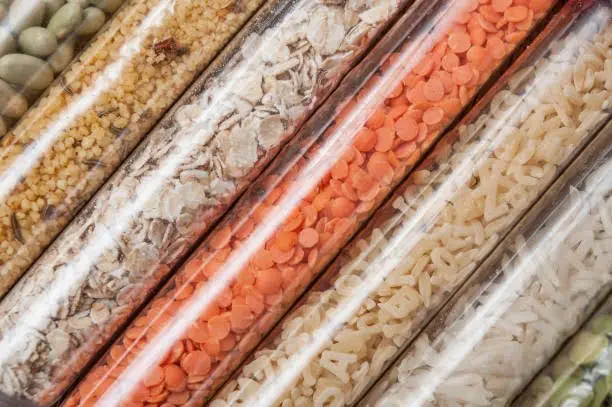
The shift away from lead-based stabilisers may have solved one major migration concern, but it didn’t eliminate the problem entirely. Today’s food-contact PVC producers face a broader spectrum of migration risks stemming from plasticisers, processing aids, and alternative stabiliser chemistries, each of which can exhibit its own migration behaviour.
These migration profiles are now under close regulatory scrutiny and can affect food safety. Certain organotin and amine-based stabilisers can release compounds into food under heat, acidic exposure, or prolonged contact.
Phthalate plasticisers, once widely used for flexible PVC applications, have faced increasing restrictions due to their classification as endocrine disruptors under REACH Annex XVII and SVHC listings. In addition, new stabiliser chemistries that were initially considered safe must undergo thorough evaluation to ensure they do not introduce unexpected residues.
With every regulatory update, permissible migration limits become tighter, leaving little room for legacy formulations to remain compliant. Manufacturers relying on suppliers who haven’t verified their stabiliser transitions risk non-compliance, which can result in severe consequences such as product recalls, export barriers, suspension of certifications, and long-term reputational damage.
Under EC Regulation 10/2011, food-contact materials must demonstrate compliance through standardised migration testing. Manufacturers are ultimately responsible for ensuring their formulations meet the overall migration limit of 10 mg/dm², as well as specific limits for individual substances. A single contamination incident can be costly, not only financially but also in terms of brand trust, which is often difficult to restore once lost.
The Solution:
Food-grade PVC stabiliser portfolio, including Calcium Zinc stabilisers (available in powder, paste, and liquid forms) and Octyl Tin Mercaptide (STS-2), is fully lead-free and produced in ISO-certified facilities. All products are validated against REACH, RoHS, EC 10/2011, and FDA 21 CFR standards, providing manufacturers with confidence and assurance of compliance.
Comprehensive documentation, including migration test data and regulatory certificates, is provided for all food-grade grades. Calcium Zinc systems have become the global benchmark for non-toxic PVC stabilisation, offering full regulatory compliance while maintaining strong thermal and mechanical performance.
Challenge 2: Discolouration And Poor Colour Retention During Processing
In food-contact PVC manufacturing, colour is more than an aesthetic attribute, it signals material integrity and quality. Yellowing or browning during extrusion indicates thermal degradation and the release of hydrochloric acid, both signs of insufficient stabiliser performance at high temperatures.
For brand owners, even minor colour deviations can compromise the perceived quality of the packaged food. The problem is particularly critical in transparent and rigid applications such as blister packs, clamshells, and pharmaceutical packaging, where clarity is non-negotiable.
High-shear processing conditions, extended residence times, and the use of recycled PVC content further complicate colour stability. Some manufacturers attempt to resolve discolouration by increasing stabiliser loading, but this approach can introduce surface bloom, haze, and unnecessary cost, without truly addressing the underlying instability.
The Solution:
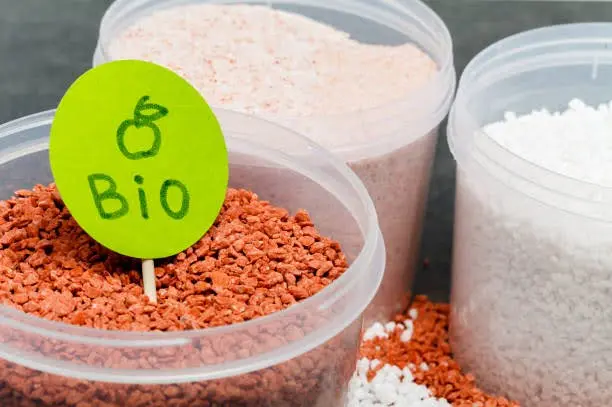
Calcium Zinc Paste stabiliser is formulated for transparent and rigid food-grade applications. Its synergistic combination of calcium and zinc carboxylates with co-stabilisers and antioxidants ensures superior early colour hold and long-term heat stability.
Even under demanding extrusion or calendaring conditions, it maintains optical clarity, preventing yellowing or hazing. Manufacturers report consistent batch-to-batch colour performance and significantly reduced scrap rates after switching to Calcium Zinc systems, making production both efficient and reliable.
Challenge 3: Odour And Taste Migration Into Food Products
Odour and taste migration represents one of the most technically challenging aspects of food-contact PVC manufacturing. Certain organotin and amine-based stabilisers can introduce volatile compounds that impart detectable odours or flavour-active residues into packaged food, beverages, or pharmaceuticals.
Even trace-level migration can render an entire production batch unmarketable. Studies published in Food Additives and Contaminants have documented that volatile compounds derived from PVC stabiliser systems can migrate into food simulants under standard conditions, with organotin compounds among the substances of concern.
The difficulty is compounded by the fact that odour migration may not appear during standard quality checks; it often emerges only during extended shelf-life testing or at the consumer level. EC Regulation 10/2011 imposes strict specific migration limits for stabiliser-derived compounds, and ensuring compliance requires validated testing rather than assumptions about formulation safety.
The Solution:
Calcium Zinc stabilisers are engineered for odourless, food-grade applications. The powder grade is ideal for films, cables, profiles, tubings, and toys where odour-free performance is essential.
Octyl Tin Mercaptide (STS-2), Food-grade organotin solution, is validated for food-contact films and medical applications, minimising odour and taste transfer. Manufacturers producing packaging for sensitive food and beverage categories can rely on stabilisers to meet stringent odour compliance standards, ensuring product safety and consumer confidence.
Challenge 4: Inconsistent Thermal Stability Across Processing Methods
Food-contact PVC is processed using multiple methods including extrusion, calendaring, injection moulding, dip moulding, and blow moulding, each presenting distinct thermal and mechanical challenges.
A stabiliser that performs well in flat film extrusion may behave inconsistently in medical tubing production, where barrel residence times and shear conditions differ. Such inconsistencies result in unpredictable processing windows, increased scrap rates, and frequent formulation adjustments, driving up operational costs.
Research has shown that the effectiveness of PVC stabilisers is highly dependent on both formulation and processing method. Calcium Zinc systems, in particular, require optimisation for specific applications, as their performance may vary according to physical form and process conditions.
Overcompensation through higher stabiliser loading can create haze, blooming, and cost inefficiencies without truly solving thermal instability.
The Solution:
Calcium Zinc stabilisers come in powder, paste, and liquid forms, enabling manufacturers to select the appropriate stabiliser for their specific processing method. The liquid grade is tailored for transparent, rigid, soft, and medical-grade applications, ensuring consistent thermal performance across different processing environments.
It’s important to determine the optimal stabiliser loading for each application, eliminating over-stabilisation while maintaining reliable processing windows. This collaborative approach ensures stable production with minimal waste and consistent quality.
Challenge 5: Balancing Clarity, Gloss, And Mechanical Performance
Food-contact PVC packaging from pharmaceutical blister packs to flexible food wraps is judged not only by its functional performance but also by optical properties. High clarity, strong gloss, and uniform film thickness are critical quality parameters, often forming the basis of brand-owner specifications.
At the same time, the material must retain tensile strength, flexibility, and impact resistance, especially in flexible packaging applications. Achieving these properties simultaneously requires a delicate balance in formulation.
Research indicates that stabiliser–lubricant interactions significantly influence optical performance; incompatible combinations can lead to haze, surface defects, and compromised barrier properties.
For manufacturers supplying premium food or pharmaceutical packaging, failure in any single dimension such as clarity, gloss, or mechanical integrity can result in lost contracts and reputational damage.
The Solution:
Food-grade stabiliser systems are formulated with high transparency and gloss as core objectives. When used alongside SVP’s complementary lubricants and additives, including metallic stearates that provide internal and external lubrication without compromising optical properties, manufacturers can consistently achieve the ideal combination of clarity, gloss, and mechanical strength.
Benchmark data demonstrates that Calcium Zinc systems match or exceed legacy lead-based stabilisers in transparency, while delivering full regulatory compliance, a combination that legacy systems cannot provide.
Lead-Based Stabilisers VSFood-Grade Stabilisers: A Summary Table
The differences between lead-based and food-grade stabiliser systems extend well beyond regulatory status. The table below compares both systems across the performance, safety, and compliance dimensions that matter most to food-contact PVC manufacturers.
| Parameter | Lead-Based Stabilisers | Food-Grade Stabilisers (Ca/Zn and Octyl Tin) |
| Regulatory Status | Banned or severely restricted under REACH, RoHS, EC 10/2011, FDA 21 CFR, and FSSAI | Fully compliant with REACH, RoHS, EC 10/2011, FDA 21 CFR, and FSSAI |
| Food-Contact Approval | Not permitted for food-contact applications | Approved for direct and indirect food-contact use |
| Toxicity Profile | Acutely toxic; classified as a human carcinogen and neurotoxin (IARC Group 2A) | Non-toxic; no classification as carcinogen or endocrine disruptor |
| Migration Risk | High; lead ions migrate into food under heat, acidity, and prolonged contact | Low to negligible when correctly formulated and migration-tested |
| Thermal Stability | Excellent; historically superior processing window | Comparable with advanced Ca/Zn formulations incorporating co-stabilisers and antioxidants |
| Colour Hold | Strong long-term colour retention | Excellent early colour hold with modern synergistic Ca/Zn systems |
| Optical Clarity | Good transparency in rigid applications | Matches or exceeds lead-based systems in transparent film and blister applications |
| Odour Profile | Odour-neutral in most processing conditions | Formulated for odourless output in food, pharma, and medical applications |
| Processing Compatibility | Broad compatibility across extrusion, calendaring, and moulding | Available in powder, paste, and liquid grades optimised for all major processing methods |
| Heavy Metal Content | Contains lead (Pb); classified as hazardous waste | Zero heavy metals; non-hazardous waste classification |
| Worker Safety | Significant occupational exposure risk via inhalation and skin contact during processing | Safe handling profile; no acute toxicity designation |
| Export Market Access | Disqualifies products from EU, US, and most regulated markets | Enables full access to all regulated global markets |
| Certification Eligibility | Ineligible for ISO food safety, FSSC 22000, and major retailer compliance programs | Eligible for all major food safety and quality certifications |
| Environmental Compliance | Fails extended producer responsibility and circular economy requirements | Meets EPR and circular economy standards in the EU and other jurisdictions |
| Long-Term Viability | Phase-out mandated globally; no pathway to continued food-contact use | Established as the industry standard for food-contact PVC globally |
Why Is SV Plastochem The Trusted Partner For Food-Grade PVC Stabilisers?
SV Plastochem is India’s leading manufacturer of tin-based stabilisers, catalysts, and compounds, supplying manufacturers in over 25 countries. Its food-grade PVC stabiliser portfolio, built on advanced Calcium Zinc chemistry and Octyl Tin Mercaptide technology represents decades of specialised formulation expertise applied to the most demanding performance requirements.
Every batch of SVP food-grade stabiliser is produced in ISO-certified facilities and validated against global safety norms, including REACH, RoHS, EC 10/2011, and FDA 21 CFR, and is completely lead-free. Beyond manufacturing, SVP’s technical team provides direct application support, helping manufacturers optimise formulations, navigate regulatory transitions, and consistently produce audit-ready batches.
For food-contact PVC manufacturers seeking to upgrade stabiliser performance, complete a lead-free transition, or access food-grade compliant chemistry for new applications, SV Plastochem is a co-innovation partner that delivers.
Whether you need samples, technical data sheets, or a full formulation review, SVP’s team is ready. Reach out to SV Plastochem today to ensure your food-contact PVC formulations meet both performance and regulatory expectations.
FAQs
1) What Makes A PVC Stabiliser Food-Grade, And How Do I Know If Mine Qualifies?
A food-grade PVC stabiliser must be lead-free, must not contribute toxic, odorous, or flavour-active compounds that migrate into food or pharmaceuticals, and must comply with applicable regulatory frameworks such as EU Regulation EC 10/2011, FDA 21 CFR guidelines, and REACH. The most widely accepted food-grade stabiliser chemistries are Calcium Zinc and Octyl Tin Mercaptide. To confirm compliance, request batch-specific documentation, migration test data, and regulatory certificates from your stabiliser supplier. SVP provides full compliance documentation for all food-grade stabiliser grades.
2) Can Calcium Zinc Stabilisers Match The Thermal Performance Of Traditional Organotin or Lead-Based Systems?
Yes, with the right formulation. Modern Calcium Zinc stabiliser systems incorporating advanced co-stabilisers, antioxidants, and processing aids can deliver thermal stability comparable to tin-based systems and significantly superior to lead-based systems for most food-contact applications (Benavides et al., 2012).[²⁰] SVP’s Calcium Zinc grades are optimised for extrusion and calendaring of food packaging films, medical tubing, and pharmaceutical blister packs, providing consistent processing windows without the regulatory liability of legacy chemistries. Request SVP’s technical benchmark data.
3) What Is The Difference Between Calcium Zinc Stabiliser And Octyl Tin Mercaptide For Food-Contact PVC?
Both are food-grade PVC stabiliser options serving different application profiles. Calcium Zinc stabilisers are the preferred choice for broad food-contact applications including packaging films, profiles, tubing, and toys, and are available in powder, paste, and liquid forms. Octyl Tin Mercaptide (SVP’s STS-2) is a non-toxic organotin stabiliser particularly suited to food-grade films requiring exceptional clarity and for medical applications such as blister packaging and IV tubing. Talk to SVP’s team to identify the right grade for your application.
4) How Do I Manage The Transition From Lead-Based Stabilisers To Food-Grade Alternatives Without Disrupting Production?
Transitioning requires careful reformulation to maintain processing performance and product quality. Key steps include auditing current formulations and processing parameters, working with a technically capable stabiliser supplier to develop equivalent lead-free formulations, running controlled pilot trials, and updating regulatory documentation. SV Plastochem has supported numerous manufacturers through this transition. Download SVP’s free Lead-Free Transition Playbook.
5) Does The Physical Form Of The Stabiliser Affect Its Performance In Food-Contact PVC Applications?
Yes, physical form matters significantly. Powder Calcium Zinc stabilisers are ideal for dry-blend PVC compounds in food-grade films, cables, profiles, and odourless tubing. Paste forms suit transparent applications requiring precise dosing. Liquid Calcium Zinc stabilisers offer the broadest compatibility, performing well across transparent, rigid, soft, and medical-grade applications, and are generally preferred where homogeneous dispersion and processing consistency are critical. Explore all three Calcium Zinc grades on the SVP product page.