

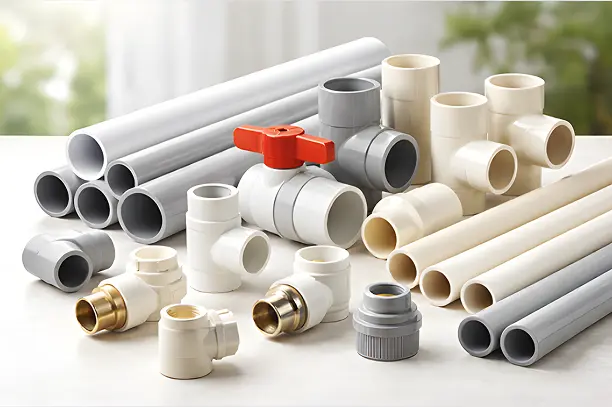
Methyl Tin Stabilisers are a highly important class of organotin heat stabilisers widely used in rigid Polyvinyl Chloride (PVC) processing. They are especially valued in applications where clarity, long-term thermal stability, and strong mechanical performance are required.
Rigid PVC is naturally prone to thermal degradation during processing, and without stabilisers, it can rapidly lose its structure, discolor, and release hydrochloric acid (HCl), which further accelerates breakdown.
Methyl tin stabilisers solve this challenge by ensuring that PVC remains stable during high-temperature processing and retains its performance over its lifecycle. These stabilisers are most commonly used in transparent and rigid PVC products such as pipes, fittings, profiles, sheets, and bottles.
Their popularity comes from their ability to provide excellent heat stability, good initial colour, and long-term clarity without affecting the physical properties of the final product. In modern PVC formulation technology, methyl tin stabilisers are considered one of the most efficient and reliable stabilisation systems.
Methyl Tin Stabilisers In Rigid PVC: Explained
Methyl tin stabilisers are organotin compounds where tin is bonded with methyl groups and stabilising ligands such as mercaptides or carboxylates. These compounds are specifically designed to protect PVC during processing at elevated temperatures, typically between 160°C and 200°C, where degradation would otherwise occur.
Rigid PVC contains chlorine atoms in its polymer backbone. Under heat and shear, PVC tends to undergo dehydrochlorination, which releases hydrogen chloride (HCl). This process is autocatalytic, meaning once it begins, it accelerates rapidly unless controlled.
Methyl tin stabilisers interrupt this degradation cycle by neutralising HCl and replacing unstable chlorine atoms in the polymer chain. Their performance is influenced by the type of methyl tin chemistry used, processing conditions, and compatibility with other additives.
Common forms include methyl tin mercaptides and methyl tin carboxylates, each offering different balances of initial colour stability, long-term heat resistance, and processing safety.
Mechanism Of Action In PVC Stabilisation
The effectiveness of methyl tin stabilisers lies in their dual mechanism: HCl scavenging and substitution stabilisation. These two actions work together to prevent degradation and maintain the integrity of rigid PVC during processing and use.
When PVC is exposed to heat, the first step of degradation is the removal of hydrogen chloride from the polymer chain. This creates unstable double bonds along the backbone, leading to discoloration and further breakdown. Methyl tin stabilisers neutralise this HCl immediately, preventing it from acting as a catalyst for further degradation.
At the same time, methyl tin compounds replace labile chlorine atoms in the PVC chain with more stable organotin groups. This substitution stabilisation helps stop the chain reaction of dehydrochlorination. As a result, the polymer structure remains intact for a longer period during processing.
The Overall Mechanism Can Be Understood In Simple Steps:
- PVC begins to release HCl under heat
- Methyl tin stabiliser reacts with and neutralises HCl
- Unstable chlorine sites in PVC are replaced or deactivated
- Formation of conjugated double bonds is slowed down
- Thermal degradation is significantly delayed
This combined mechanism ensures that rigid PVC maintains its colour, strength, and processability even under demanding manufacturing conditions.
Benefits Of Methyl Tin Stabilisers In Rigid PVC
The Key Benefits Of Methyl Tin Stabilisers In Rigid PVC Are:
1) Excellent Initial Colour Stability: Methyl tin stabilisers help PVC retain a clean, transparent, and consistent appearance during processing. They effectively reduce early-stage yellowing that can occur when PVC is exposed to heat, shear, and oxygen.
This is especially important for applications such as clear bottles, medical-grade components, and transparent pipes where even slight discoloration can affect product acceptance. The stable colour performance also improves product aesthetics and market value.
2) High Long-Term Thermal Stability: These stabilisers provide strong protection against continuous heat exposure, ensuring that PVC does not degrade quickly over time. They slow down dehydrochlorination and other thermal degradation reactions, allowing the material to maintain its mechanical strength, rigidity, and structural integrity even in demanding outdoor or industrial environments. This makes them suitable for applications requiring long operational lifespans.
3) Superior Optical Clarity & Transparency: One of the most important advantages of methyl tin stabilisers is their ability to maintain excellent clarity in rigid PVC. Unlike some stabiliser systems that can create haze or cloudiness, methyl tin compounds preserve the natural transparency of the polymer. This is particularly valuable in packaging, medical, and decorative applications where visual quality directly influences product acceptance and usability.
4) Stable Processing Performance: Methyl tin stabilisers ensure smooth and controlled processing by maintaining consistent melt viscosity during extrusion and molding. This stability helps manufacturers reduce processing fluctuations, avoid defects such as burn marks or surface irregularities, and achieve better control over final product dimensions and surface finish. It also improves production efficiency by reducing rejection rates.
5) Strong Compatibility With Rigid PVC Formulations: These stabilisers blend effectively with a wide range of PVC additives such as lubricants, impact modifiers, fillers, and processing aids. This compatibility allows formulators to design balanced systems without compromising stability, ensuring that all components work together efficiently during processing. It also provides flexibility in product design across different applications.
6) Improved Product Lifespan & Reduced Degradation: By slowing down both thermal and oxidative degradation mechanisms, methyl tin stabilisers significantly extend the service life of PVC products. This results in materials that retain their strength, flexibility, and appearance for longer periods, reducing maintenance, replacement costs, and material waste over time. It also enhances product reliability in critical applications.
Applications In Rigid PVC Products
The Key Applications Of Methyl Tin Stabilisers In Rigid PVC Products Are:
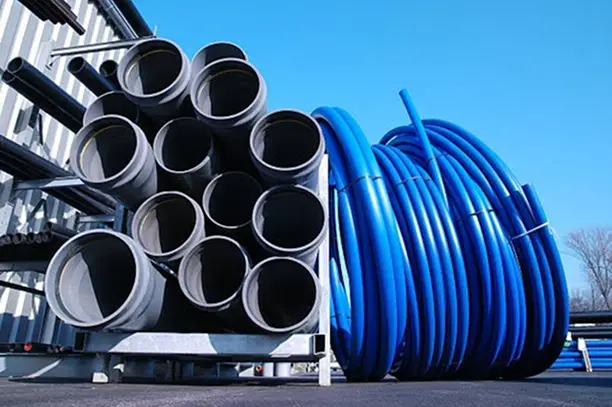
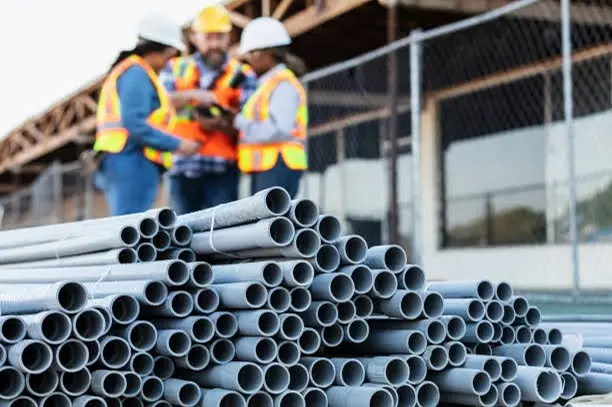
a) PVC Pipes & Fittings — These are extensively used in plumbing, irrigation, and industrial fluid transport systems. Methyl tin stabilisers ensure that pipes and fittings maintain strong structural integrity, dimensional accuracy, and thermal resistance during processing and throughout their operational life.
They also help prevent brittleness and discoloration, ensuring long-term reliability in water distribution and industrial systems. Their stability under pressure and temperature variations makes them highly dependable.
b) Rigid PVC Window Profiles & Doors — In construction and architectural applications, these stabilisers play a key role in maintaining surface finish, colour consistency, and weather resistance. They help PVC profiles withstand exposure to sunlight, rain, and temperature fluctuations without fading, cracking, or losing structural strength. This ensures that building components remain durable, visually appealing, and low-maintenance over many years of use.
c) Rigid PVC Sheets & Panels — Used in industrial fabrication, signage, and construction applications, rigid PVC sheets benefit from improved transparency, thermal resistance, and mechanical stability. Methyl tin stabilisers help ensure that sheets remain flat, uniform, and free from defects even after exposure to heat and processing stress. This makes them suitable for applications requiring both visual quality and structural reliability.
d) Blister Packaging Materials — In pharmaceutical and consumer packaging, clarity and precision are essential. Methyl tin stabilisers help produce rigid PVC films with excellent transparency, uniform thickness, and smooth surface quality. They also support safe and stable processing, making them suitable for regulated packaging environments where consistency and safety are critical.
e) Technical & Specialty Films — These films require precise control over flexibility, clarity, and mechanical strength. Methyl tin stabilisers help maintain consistent film properties during processing, ensuring uniformity, smoothness, and stability in demanding applications such as industrial coverings, protective films, and specialty wraps.
f) Regulated & High-Purity Applications —In industries such as healthcare, food packaging, and medical devices, material safety and consistency are critical. Methyl tin stabilisers are used in carefully controlled formulations to ensure compliance with strict quality standards while maintaining clarity, stability, and reliable performance. This makes them suitable for applications where both safety and precision are essential.
Formulation Guidelines For Methyl Tin Stabilisers
Formulating rigid PVC with methyl tin stabilisers requires careful balance between stabiliser dosage, processing temperature, and compatibility with other additives. Even though they are highly efficient at low concentrations, correct formulation is essential to achieve optimal performance.
Typically, methyl tin stabilisers are used in small dosages depending on the application and processing conditions. Overuse does not significantly improve performance and may increase cost without added benefit. Underuse, however, can lead to poor colour stability and faster degradation.
Key Formulation Considerations Include:
- Dosage Control: The stabiliser is usually added in precise, low concentrations depending on PVC grade and application
- Processing Temperature: Must be optimized to ensure stabiliser efficiency without thermal overload
- Lubricant Balance: External and internal lubricants must be compatible to avoid processing defects
- Filler Compatibility: Calcium carbonate and other fillers should not interfere with stabiliser performance
- Mixing Uniformity: Proper dispersion ensures consistent thermal protection across the entire batch
In industrial practice, stabilisers are often pre-blended into one-pack systems to simplify processing and improve consistency. These systems ensure that all additives work synergistically without causing processing instability.
Processing Performance And Stability Considerations
Methyl tin stabilisers perform best under controlled processing conditions. In extrusion and injection molding, stable temperature control is essential to prevent localized overheating, which can accelerate PVC degradation even in the presence of stabilisers.
They also help maintain consistent melt flow behavior, which is important for producing dimensionally accurate rigid PVC products. This stability reduces production defects such as discoloration, brittleness, or surface imperfections.
Another important factor is compatibility with other additives such as impact modifiers, processing aids, and UV stabilisers. Methyl tin systems generally integrate well with these additives, allowing manufacturers to design balanced formulations for specific performance requirements.
Enhance your rigid PVC formulations with premium-grade stabilisers engineered for long-term clarity, strength, and heat resistance.
Final Words
Methyl Tin Stabilisers play a critical role in the processing and performance of rigid PVC materials. Their ability to prevent thermal degradation, neutralize HCl, and maintain polymer stability makes them one of the most effective stabilisation systems available.
Through a combination of chemical protection and processing support, they ensure that rigid PVC products remain strong, clear, and durable under demanding conditions. From pipes and profiles to transparent packaging and industrial components, methyl tin stabilisers help achieve consistent quality, improved aesthetics, and long service life.
Their efficiency at low dosage, strong thermal resistance, and excellent compatibility with PVC formulations make them indispensable in modern polymer manufacturing.
With proper formulation and controlled processing, methyl tin stabilisers continue to support high-performance rigid PVC applications across construction, packaging, and industrial sectors, ensuring reliability and quality in everyday materials.
FAQs
1. What Are Methyl Tin Stabilisers And Why Are They Important In Rigid PVC Processing?
Methyl tin stabilisers are organotin heat stabilisers used in rigid PVC to prevent thermal degradation during high-temperature processing. They help maintain clarity, mechanical strength, and structural integrity by neutralising hydrochloric acid and stabilising the polymer chain. These stabilisers are especially important in applications where long-term performance and optical transparency are required. They ensure PVC products remain durable, stable, and visually consistent throughout their lifecycle.
2. How Do Methyl Tin Stabilisers Work In The Stabilisation Of Rigid PVC?
Methyl tin stabilisers work through a dual mechanism involving HCl scavenging and substitution stabilisation. They neutralise hydrogen chloride released during PVC degradation and replace unstable chlorine sites in the polymer backbone. This interrupts the chain reaction of dehydrochlorination and slows down discoloration and structural breakdown. As a result, PVC maintains better colour stability, strength, and processability during manufacturing.
3. Where Are Methyl Tin Stabilisers Commonly Used In PVC Applications?
Methyl tin stabilisers are widely used in rigid PVC pipes, window profiles, sheets, blister packaging, clear bottles, and specialty films. These applications require high clarity, durability, and consistent processing performance. They are also used in regulated sectors such as medical and food packaging where material stability and safety are critical. Their versatility makes them suitable for both industrial and consumer-focused PVC products.