

In industrial chemistry, the key to a good product is the right catalyst. One of those catalysts that has become firmly established in the production of alkyd and polyester resins is Monobutyltin oxide (MBTO).
Manufacturers across the coatings, adhesives, and polymer industries rely on it daily, yet a clear technical overview of exactly what MBTO does and why it works so well is often hard to find in one place. This article covers that ground fully.
Chemical Identity and Physical Properties of MBTO
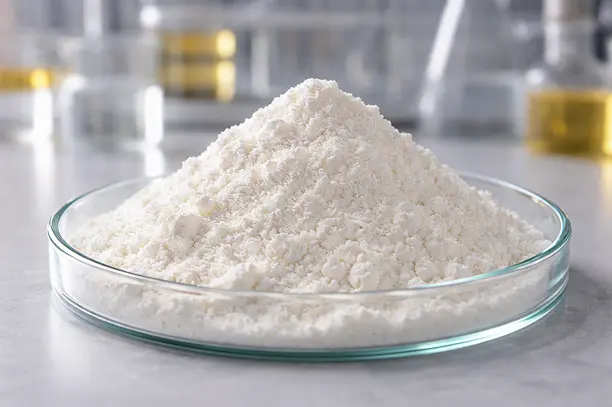
MBTO belongs to the organotin family of compounds. Its systematic chemical name is monobutyltin oxide, and its CAS number is 2273-43-0. At room temperature, it presents as an amorphous white powder with no distinct crystalline structure.
Key physical and chemical properties include:
- Molecular formula: C₄H₉SnO·OH (often written as C₄H₁₀O₂Sn)
- Appearance: White to off-white amorphous powder
- Solubility in water: Practically insoluble
- Solubility in common organic solvents: Also, very low MBTO does not dissolve readily in standard solvents
- Solubility in acids and alkalis: Dissolves in mineral acids and strong bases
- Nature: Neutral catalyst, it does not introduce acidity or alkalinity into a reaction system
This combination of properties, particularly its insolubility in water, its hydrolytic stability, and its neutral character, is what makes MBTO suited to high-temperature esterification processes.
The Role of MBTO as an Esterification Catalyst
Esterification is the reaction between an acid (or acid anhydride) and an alcohol to form an ester linkage with the release of water. This condensation reaction must proceed efficiently between 180°C and 260°C at a controlled temperature, in the production of alkyd and polyester resins.
These reactions without a catalyst occur slowly, and it may take a longer processing time or a higher temperature to obtain the desired acid value. MBTO solves this problem. A catalyst speeds up the equilibrium of the esterification reaction without altering the product’s chemistry.
Looking for a reliable MBTO supplier? SV Plastochem offers high-purity tin catalysts with full batch traceability and supplies to 25+ countries.
How MBTO Works: The Catalytic Mechanism
MBTO acts as a Lewis acid catalyst. The tin atom in its structure has vacant orbitals that can accept electron pairs from the carbonyl oxygen of carboxylic acid groups. This interaction lowers the activation energy needed for the ester bond to form, allowing the reaction to proceed at a faster rate and at comparatively lower temperatures than would otherwise be required.
The mechanism can be summarised in three functional steps:
- Coordination: The tin centre in MBTO coordinates with the carboxylic acid group, activating the carbonyl carbon and making it more electrophilic.
- Nucleophilic attack: The hydroxyl group of the alcohol attacks the activated carbonyl carbon, forming a tetrahedral intermediate.
- Elimination and regeneration: Water is eliminated to form the ester bond, and MBTO is regenerated to continue catalysing further reactions.
Because MBTO is regenerated in this process, very small amounts, typically in the range of 0.01% to 0.1% by weight of the total batch, are sufficient to achieve significant acceleration. This makes it economically attractive alongside its technical benefits.
An important characteristic worth noting is that MBTO remains in the resin matrix after the reaction. At the concentrations used in industrial practice, this does not significantly affect the resin’s final properties.
Performance Advantages in Alkyd and Polyester Resin Production
Compared to older catalysts such as lead-based or titanate-based systems, MBTO offers several practical advantages:
| Parameter | MBTO Performance |
| Reaction rate | Significantly accelerated vs. uncatalysed process |
| Colour of resin | Good colour retention; light-coloured resins are achievable |
| Hydrolytic stability | Highly performs consistently in moisture-generating reactions |
| Catalyst loading required | Low typically 0.01–0.1% w/w |
| Compatibility | Compatible with most polyols and polyacids used in alkyd/polyester synthesis |
| Post-reaction residue | Remains in resin matrix; generally acceptable at recommended levels |
Formulators who switch from conventional acid catalysts to MBTO often report shorter cook times, lower processing temperatures for equivalent acid value reduction, and consistent batch-to-batch colour.
Safety Considerations and Handling
MBTO is an organotin compound and, like all tin-based materials, requires careful handling. Users must follow the safety data sheet (SDS) provided by the supplier at all times.
Key safety points to be aware of:
- Skin and eye contact: Avoid direct contact. Use appropriate gloves, eye protection, and protective clothing.
- Inhalation: Although MBTO is a solid with low volatility, fine dust can be generated during weighing or transfer. Use dust masks or respiratory protection in poorly ventilated areas.
- Storage: Store in tightly sealed containers, away from moisture and strong acids or bases that could cause unwanted dissolution. Keep in cool, dry conditions.
- Disposal: Dispose of in accordance with local regulations governing organotin compounds. Do not discharge into water systems.
Applications of MBTO Across Industries
While alkyd and polyester resin production is the primary application, MBTO’s catalytic activity is also valued in:
1. Polyester Powder Coating Resin Manufacturing
This is one of the largest commercial uses of MBTO today. In powder coating resin plants, where production volumes are high and cycle times directly affect profitability.
MBTO delivers a documented 20–25% reduction in esterification cycle time, directly increasing plant throughput and cutting energy costs per batch. MBTO integrates into the final resin matrix after the reaction, so producers do not need to add neutralisation or filtration steps post-reaction, resulting in a meaningful saving for high-volume producers.
2. High-Clarity Alkyd Resins and Clear Coatings
Not all resins are equal when it comes to colour and clarity. Where quality and optical clarity define product value varnishes, clear topcoats, and light-coloured decorative finishes, MBTO has a proven edge.
Comparative data shows it produces resins with better colour properties and lower haze than lithium-based catalyst systems, making it the preferred choice for formulators supplying premium architectural and industrial coatings.
3. Cost-Optimised PVC Heat Stabilisation
Rigid PVC producers working on pipes, window profiles, and construction materials often seek ways to manage raw material costs without sacrificing performance.
MBTO fits that gap well; it offers around 85–90% of the thermal stabilisation performance of dibutyltin compounds, but typically at 60–70% of the cost.
4. Polyurethane Synthesis
MBTO is not typically the primary catalyst in polyurethane production, but it is used as a co-catalyst in certain formulations where its Lewis acid character supports controlled bond formation alongside a main catalytic system.
5. Transesterification Reactions
Wherever ester groups need to be exchanged between compounds to adjust polymer properties or molecular weight, MBTO’s tin-based mechanism operates reliably at the elevated temperatures required for such reactions.
6. Polycarbonate and Speciality Polymer Synthesis
Beyond resins and PVC, MBTO serves as a co-catalyst in select polyurethane formulations and transesterification reactions. It’s valued in speciality polymer chemistry, including certain polycarbonate synthesis routes, wherever controlled, high-temperature condensation catalysis is required. MBTO offers a thermally stable, neutral catalytic option that does not introduce unwanted acidity or side reactions into the process.
This versatility reflects the broad utility of tin-based Lewis acid catalysts across condensation polymerisation chemistry.
SV Plastochem manufactures tin catalysts, including MBTO, built for consistent performance across resin, coatings, and PVC applications. Explore the Range
Conclusion
MBTO has become a standard, technically effective catalyst in the production of esterification reactions in alkyd and polyester resins. It is a neutral, hydrolytically stable product with low loading requirements; it also speeds up condensation reactions at processing temperatures, making it an excellent choice for resin producers who want to maintain consistent resin quality.
Understanding its mechanistic workings and respecting its handling requirements enable chemists and process engineers to get the best from it while maintaining safe, compliant operations.
FAQs
Q1: What does MBTO stand for in chemistry?
MBTO stands for Monobutyltin Oxide, an organotin compound with CAS number 2273-43-0 used primarily as an esterification catalyst.
Q2: Why is MBTO preferred in alkyd resin production?
MBTO accelerates esterification reactions at lower temperatures and catalyst loadings while producing light-coloured resins with consistent acid value profiles.
Q3: Is MBTO soluble in water or solvents?
No. MBTO is practically insoluble in water and most common organic solvents, but it dissolves in mineral acids and strong alkalis.
Q4: What is the typical dosage of MBTO in polyester resin synthesis?
MBTO is typically used at 0.01% to 0.1% by weight of the total batch, which is sufficient to meaningfully accelerate esterification.
Q5: Are there safety concerns with using MBTO?
Yes. As an organotin compound, MBTO requires proper PPE during handling, adequate ventilation to avoid dust inhalation, and disposal in line with local regulations governing tin-based chemicals.