

During the manufacturing process, the quality plays an important role behind-the-scenes. It is responsible for the critical factors such as performance, durability, safety, and value of your products.
In this blog, we discuss how quality chemistry extends from the manufacturing stage to application, drawing on insights from speciality chemical producers like SV Plastochem to inform our understanding.
What Is Quality Chemistry in Manufacturing?
Quality chemistry is simple to understand. It is the selection and precise formulation of chemicals, such as stabiliser, catalysts, additives, and intermediates, that are required during manufacturing processes, ensuring the final materials exhibit predictable and reliable properties. Quality chemistry impacts chemical stability, performance consistency, safety & compliance, and End-user performance outcomes.
In speciality chemical manufacturing, like the production of tin stabiliser or metallic stearates used in PVC processing, chemistry forms the backbone of the product reliability and ultimately shapes the real-world effectiveness of the end product.
SV Plastochem: A Case Study in Chemistry-Driven Quality
Founded in 1997, SV Plastochem Pvt. Ltd. has grown into a recognised manufacturer of tin stabilisers, lead-based stabilisers, metallic stearates, catalysts, and intermediates that serve sectors ranging from PVC/CPVC pipe manufacturers to pharmaceuticals and coatings industries.
Our quality policy underscores a total commitment to customer satisfaction, quality excellence, and continuous innovation, demonstrating that chemistry isn’t an afterthought; it’s central to both the manufacturing process and customer outcomes.
This commitment has practical implications: the right chemical compounds not only ensure the structural integrity of materials but also enhance their processing, durability in application, and compliance with regulatory standards.
How Quality Chemical Inputs Influence End-Product Performance
In order to understand the impact of quality chemistry, these are the key areas where chemical performance directly alters the final product experience:
1. Process Stability and Efficiency:
Manufacturers look for chemical additives and intermediates that behave consistently under extreme conditions, like high temperature and high pressure.
In PVC production, stabilisers are used to prevent thermal degradation during processing, and lubricants are required to smooth melt flow and prevent wear and tear.
When these approaches are based on high-quality chemistry, manufacturing processes become more efficient, with fewer defects and less waste.
2. Mechanical Strength and Durability
End-use applications often demand strength and longevity. For instance, plastic pipes must be resistant to cracking and deformation under high pressure. The Flexible tubing must remain stable over time without hardening or becoming brittle.
When pipes are formulated correctly and engineered with precision, these properties are embedded in the material’s structure rather than just on the surface.
3. Product Consistency Across Batches
At SV Plastochem, each chemical produced is tested to strict quality standards. The chemical purity ensures reproducibility across multiple production runs, which is essential for industries with stringent regulatory requirements, such as Pharma and Food-grade plastics. Even a slight variation in the chemical purity can compromise a patient’s safety.
4. Safety and Regulatory Compliance
High-quality chemical inputs reduce impurities that may impact toxicity, flammability, or environmental acceptability. Especially in sectors such as medical devices and automotive components, compliance with global standards hinges on traceable, consistent chemistry.
5. Enhanced Functionality and Application-Specific Performance
Modern products often need specialized functions embedded directly into their materials, such as UV resistance, Antimicrobial properties, and Flame retardance. These capabilities come from carefully engineered additives and catalysts that extend performance beyond basic structural integrity.

Manufacturing Chemistry in Action: End-Use Applications
Understanding how quality chemistry influences the end product becomes clearer when we look at real-world applications:
-
PVC/CPVC Pipes and Fittings
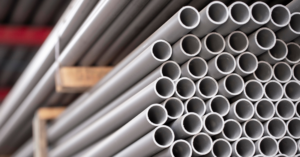
Since PVC pipes are ubiquitous in plumbing, irrigation, and industrial fluid transport, their performance and quality directly impact system reliability. Quality chemical stabiliser and lubricants ensure that the Pipes don’t degrade during the extrusion, resist stress and environmental damage, and maintain colour and mechanical uniformity.
This chemistry directly affects lifecycle performance, from installation to long-term reliability.
-
Flexible Films and Tubing
For applications such as flexible hose, shrink film, or medical tubing, the materials need to be really tough yet flexible. With the right chemical formulations, you can achieve this balance by adjusting plasticizer content, controlling crystallisation behaviour, and ensuring uniform processing.
-
Electrical Cable Insulation
To manufacture cables, additives are used to enhance fire resistance, improve thermal stability, and enhance insulating properties, which are crucial for safety and regulatory compliance. Quality tin stabiliser, mixed metal stabilisers, and stearates are used in the manufacture of the cables.
Best Practices for Chemistry-Driven Quality in Manufacturing
In order to ensure that the chemistry truly elevates product performance, the manufacturers and suppliers must follow these 4 practices:
1. Perform Rigorous Quality Control and TestingChemical intermediates must be tested for purity, performance thresholds, and batch-to-batch consistency. This includes analytical methods, documentation, and traceability systems.
2. Regulatory Alignment
For products used in regulated markets like pharmaceuticals and food-grade plastics, the materials must meet ISO, REACH, or local safety, composition, and performance standards.
3. Innovation Through R&D
At SV Plastochem, we emphasise continuous research and development to stay ahead of the curve. We regularly update formulations to improve performance and expand applications.
4. End-User Collaboration
It is important to maintain a closed feedback loop among manufacturers, chemical suppliers, and end users to enable iterative improvements and ensure that chemistry addresses real operational needs.
Why Quality Chemistry Matters in a Competitive Marketplace
Today, manufacturing capabilities are improving at a remarkable rate, and quality chemistry is taking centre stage as a critical differentiator, allowing products to stand out in highly competitive markets.
Also, by minimising defect rates and costly recalls, it strengthens reliability, resulting in higher customer satisfaction and long-term loyalty. With a bird’s-eye view, quality chemistry delivers cost efficiencies through improved durability, reduced rework, and optimised material use. Today, quality chemistry is not an isolated input in the manufacturing process, but a strategic enabler that extends application potential and drives sustainable value creation.

Conclusion
Though the journey from chemical formulation to finished product performance is complex, it is critical. Across different manufacturing sectors, right from plastics to pharmaceuticals, the quality chemistry connects manufacturing precision with end-user results.
Speciality chemical manufacturers such as SV Plastochem stand out to showcase how this connection can be institutionalised through strong quality policies, continuous innovation, and deep expertise in the chemistry of additives and intermediates.
By prioritising quality at the molecular level, manufacturers don’t just make products, they engineer performance, safety, reliability, and value that carry through every stage of application.
In the industries that are defined by performance expectations and regulatory scrutiny, chemistry isn’t just a science, but a competitive advantage.
FAQs
1. What is meant by “quality chemistry” in manufacturing?
Quality chemistry refers to the precise formulation, purity, and consistency of chemical inputs such as stabiliser, additives, catalysts, and intermediates used during manufacturing. High-quality chemistry ensures stable processing, reliable performance, and predictable behavior of the final product across applications.
2. How does quality chemistry influence the performance of end products?
Quality chemistry directly impacts properties like strength, durability, thermal stability, flexibility, and safety. When chemical inputs are well-designed and consistent, the end products perform better, last longer, and meet regulatory and application-specific requirements more effectively.
3. Why is chemical consistency important for industrial applications?
Consistency ensures that every production batch behaves the same way during processing and in real-world use. This is especially critical in industries like plastics, pharmaceuticals, and cables, where variations can lead to defects, regulatory issues, or compromised product performance.
4. Can improving chemistry reduce manufacturing costs without affecting quality?
Yes. Optimized chemical formulations help reduce waste, improve process efficiency, minimize rework, and extend product life cycles. Rather than cutting corners, quality chemistry enables cost optimization while maintaining or even enhancing product quality.
5. How do speciality chemical manufacturers support application-specific needs?
Speciality chemical manufacturers work closely with customers to develop formulations tailored to specific applications, such as pipes, films, cables, or coatings. Through R&D, testing, and continuous improvement, they ensure that chemical solutions align with processing conditions, performance expectations, and regulatory standards.