

When a silicone sealant is applied to a joint and begins to cure within minutes, without heat, without pressure, simply by exposure to air, it is doing something chemically remarkable. That curing process does not happen on its own.
It is driven by a catalyst. And for decades, the catalyst most commonly chosen for this job has been Dibutyl Tin Dilaurate, known in industry by the abbreviations DBTDL or DBTL.
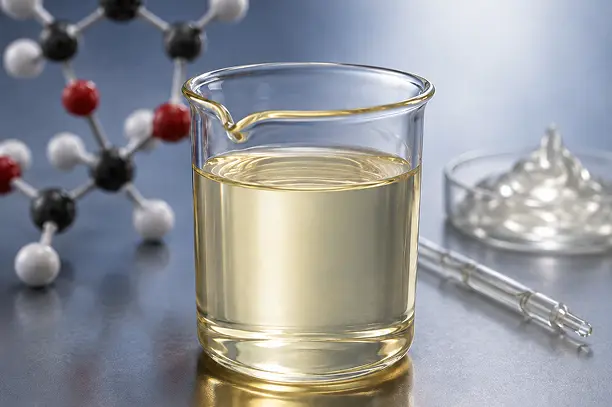
Dibutyl Tin Dilaurate is an organotin compound with the molecular formula (C₄H₉)₂Sn(OOCC₁₁H₂₃)₂. Its CAS number is 77-58-7. In its physical form, it appears as a clear to pale yellow viscous liquid with a faint, fatty acid-like odor. It is soluble in most common organic solvents including acetone, methanol, and toluene but practically insoluble in water.
Its molecular weight is approximately 631.56 g/mol, and it is encountered under trade names such as TIB KAT 218, Metatin Catalyst 712E, and Fomrez SUL-4. These properties make it highly compatible with silicone polymer matrices and coating formulations where a homogeneous, solvent-compatible catalyst is required.
To understand why DBTDL matters, it helps to start with what it does. Three defining characteristics set it apart from most other catalysts in this chemistry:
- It is a highly efficient condensation catalyst that accelerates the crosslinking of silicone polymers at ambient temperature and atmospheric humidity
- It is versatile across both one-component (RTV-1) and two-component (RTV-2) silicone systems, as well as moisture-curing coatings based on silane-terminated polymers
- It has a long, proven track record across construction, automotive, electronics, and industrial manufacturing applications, making it a reliable benchmark when starting new formulation development work
What RTV Silicone Is And Why It Needs A Catalyst?
Room Temperature Vulcanization (RTV) refers to the process by which a liquid or paste-form silicone polymer crosslinks into a solid elastomeric material at ambient conditions. The key word here is “room temperature.”
Unlike heat-cure silicones, which require elevated processing temperatures to initiate crosslinking, RTV silicones are designed to cure simply by exposure to moisture, the humidity naturally present in the surrounding air.
This is chemically elegant, but it comes with a challenge. The condensation reaction between silanol groups (Si-OH) or alkoxy groups (Si-OR) and atmospheric water is inherently slow without catalytic assistance. Left to proceed on its own, it would take impractically long times to achieve adequate crosslink density for most applications.
DBTDL solves this problem decisively by accelerating the condensation reaction, reducing cure times from potentially hours or days to minutes, depending on formulation and ambient humidity.
The mechanism by which DBTDL operates in RTV systems follows two distinct and sequential modes:
- Moisture-activated surface cure. When the sealant or coating is first exposed to air, ambient humidity reacts with the tin compound at the exposed surface. This initiates condensation of the silicone’s reactive end groups, rapidly forming a protective skin. Getting this surface skin-over time right is critical, too fast and the sealant cannot be tooled; too slow and contamination reaches the uncured surface. DBTDL gives formulators the ability to tune this balance precisely.
- Bulk crosslinking progression. Once surface cure has begun, the reaction progresses inward as moisture diffuses through the partially cured elastomer. DBTDL continues catalyzing condensation throughout this depth-of-cure process, ensuring that the final crosslink density and therefore the tensile strength, elongation at break, and adhesion performance of the cured sealant, meets the application specification.
This two-stage behavior is why DBTDL is particularly valued in one-component RTV-1 systems, where control over both surface cure rate and depth-of-cure progression is critical to real-world application performance.
The Role Of DBTDL In Moisture-Cure Coatings
Beyond conventional silicone sealants, DBTDL plays an equally important role in moisture-curing coatings — a class of protective coatings that cure not through heat or UV exposure, but through reaction with atmospheric moisture.
These systems are increasingly important in construction, infrastructure protection, and industrial maintenance. The main moisture-cure coating types where DBTDL is used include:
- Silane-Terminated Polyurethane (STPU) Coatings — Used in construction waterproofing, roofing membranes, and below-grade waterproofing applications
- Silane-Modified Polymer (SMP) Coatings — Growing rapidly as next-generation sealant bases in automotive and industrial applications, valued for their low-isocyanate or isocyanate-free formulation options
- Alkoxy-Functional Silicone Coatings — Applied to electronics, automotive components, and industrial equipment for thermal stability and environmental resistanc
- One-Component Moisture-Cure Polyurethane Coatings — Widely used in floor coatings, wood finishing, and heavy-duty industrial maintenance
In all of these systems, DBTDL functions as a condensation cure catalyst. The reactive terminal silyl groups on the polymer chain — whether alkoxy-silane (Si-OR) or silanol (Si-OH) — hydrolyze and condense in the presence of moisture, forming Si-O-Si or Si-O-C linkages that build the coating’s crosslinked network.
DBTDL accelerates both the hydrolysis step and the condensation step that follows, ensuring the coating cures at a controlled, predictable rate under ambient conditions.
Typical use levels in moisture-cure coating formulations range from “0.01% to 0.5% by weight” of the total formulation. The exact loading depends on the required cure speed, the reactivity of the polymer system, and the expected humidity conditions at the time of application.
This low effective dose is one of DBTDL’s most practical advantages, it delivers high catalytic efficiency at very small loadings, minimizing cost impact on the overall formulation.
Key Applications Across Industries
DBTDL’s catalytic performance in RTV silicone and moisture-cure chemistry has made it a formulation staple across a wide range of industrial end-uses. The industries and specific applications that rely on it most heavily include:
1) Construction & Civil Engineering — DBTDL-catalyzed silicone sealants are used for glazing, curtain wall sealing, expansion joints, sanitary applications, and structural bonding. Their ability to cure rapidly at ambient conditions, accommodate movement through high elasticity, and resist UV degradation and temperature cycling makes them the standard choice for building envelopes and facades worldwide.
2) Automotive Manufacturing — RTV silicone sealants catalyzed with DBTDL are used as formed-in-place gaskets (FIPG), engine sealing compounds, and bonding agents for interior and exterior components. The combination of rapid cure, high-temperature resistance up to 200°C or beyond, and vibration damping makes them essential in powertrain and transmission assembly.
3) Electronics & Electrical Engineering — DBTDL-cured silicone compounds are applied as potting compounds, conformal coatings, and encapsulants for printed circuit boards, sensors, and high-voltage components. Their outstanding electrical insulation properties and ability to cure at room temperature without exposing heat-sensitive components to damaging temperatures are critical performance requirements.
4) Industrial Maintenance & Protective Coatings — Moisture-cure silicone and SMP coatings catalyzed with DBTDL are applied to bridges, pipelines, offshore structures, and industrial plant equipment. They provide durable, long-service-life protection against corrosion, UV degradation, and chemical exposure, often with minimal surface preparation requirements compared to solvent-borne alternatives.
5) Cable & Wire Management — DBTDL is used in cast resin systems and cable filling compounds, where controlled room-temperature cure is required around pre-installed electrical components that cannot tolerate elevated processing temperatures.
Handling, Safety, And Regulatory Considerations
DBTDL is a highly effective catalyst, but it carries a clearly defined hazard profile that every formulator, handler, and compliance professional must understand. Both its safe handling and its regulatory trajectory in global markets are equally important to manage.
Physical And Safety Properties:
- DBTDL is classified as highly flammable and must be stored away from heat, sparks, and open flame in well-ventilated, cool conditions
- It is listed under Reproductive Toxicity Category 1B (Repr. 1B) under the EU CLP Regulation, meaning dibutyltin compounds are presumed to exhibit toxic effects on reproduction in humans based on animal evidence
- Formulations containing greater than 0.5% by weight of dibutyltin compounds must carry the Repr. 1B hazard label in Europe — a threshold that directly affects formulation design decisions
- It is practically insoluble in water, which reduces aquatic contamination risk under normal handling conditions, but any spill must be contained and disposed of as hazardous chemical waste in compliance with local regulations
- Personal protective equipment like nitrile gloves, chemical splash goggles, and adequate ventilation is required during handling to prevent skin, eye, and inhalation exposure
Regulatory Status Under EU REACH
Under the EU REACH framework, organotin compounds, including DBTDL, have faced growing regulatory scrutiny for years. Environmental agencies have signaled that dibutyltin-containing formulations may face further use restrictions in consumer applications.
The directional trend in REACH Annex XIV (Authorization) and Annex XVII (Restriction) is clearly toward tightening control of organotin compounds, particularly in products accessible to the general public.
Formulators in regulated markets are strongly advised to monitor ECHA updates closely and to proactively evaluate tin-free alternatives in their development pipelines.
Looking for reliable tin-based stabilisers and catalysts for your application? Connect with SV Plastochem today!
Conclusion: Irreplaceable Today, Evolving Tomorrow
Dibutyl Tin Dilaurate has earned its central role in RTV silicone sealant and moisture-cure coating chemistry through decades of reliable, consistent performance. It cures efficiently. It works at room temperature without energy input.
It is compatible with both one-component and two-component silicone systems. And it delivers all of this at very low loading levels, typically well below 0.5% in finished formulations, making it economically as well as technically attractive.
At the same time, the regulatory direction, particularly in Europe, is clear and moving in one direction. Organotin compounds face a future of increasing restriction, and the industry is investing meaningfully in tin-free alternatives. The most technically promising successors under development and adoption are:
- Titanium(IV) complexes, effective in alkoxy-curing RTV systems, offering broadly comparable cure kinetics to DBTDL in many standard formulations, with lower toxicological concern
- Zinc carboxylate compounds (such as zinc neodecanoate), proven in SMP and silane-terminated polymer systems, increasingly competitive in construction sealant applications where regulatory pressure is highest
- Bismuth-based catalysts, emerging in moisture-cure polyurethane and hybrid polymer coatings as a practical non-tin, lower-toxicity alternative, though still limited in the breadth of systems they can address
For now, DBTDL remains the benchmark, the catalyst against which all alternatives are measured, and the one that still delivers the most consistent, well-understood performance across the widest range of silicone and moisture-cure formulations.
Understanding exactly how it works, where it is used, and what regulatory pressures surround it is not just useful chemistry knowledge. It is essential knowledge for anyone formulating, specifying, or qualifying silicone sealants and moisture-cure coatings in today’s market.
FAQs
1) What Is Dibutyl Tin Dilaurate And Why Is It Used In RTV Silicone Sealants?
Dibutyl Tin Dilaurate, commonly known as DBTDL or DBTL, is an organotin catalyst widely used to speed up the curing of RTV silicone sealants at room temperature. It helps silicone polymers crosslink efficiently when exposed to moisture in the air, allowing the sealant to form a solid elastomer without heat or pressure. This makes it especially valuable in one-component and two-component silicone systems where controlled curing is essential. Its high catalytic efficiency and compatibility with silicone formulations have made it a long-standing industry standard.
2) How Does DBTDL Help Moisture-Cure Coatings Perform Better?
In moisture-cure coatings, DBTDL accelerates the chemical reactions that occur when reactive polymer end groups come into contact with atmospheric moisture. By speeding up hydrolysis and condensation, it helps coatings cure at a predictable rate under ambient conditions. This improves application efficiency, supports stronger crosslinking, and contributes to the final coating’s durability, adhesion, and environmental resistance. Because it works effectively at very low concentrations, it also remains cost-efficient for formulators.
3) In Which Industries Is DBTDL Commonly Used?
DBTDL is widely used in industries such as construction, automotive, electronics, electrical engineering, and industrial maintenance. In construction, it is found in glazing sealants, expansion joint materials, and waterproofing systems. In automotive applications, it is used in formed-in-place gaskets, engine sealants, and bonding compounds. It also plays an important role in electronics potting compounds, conformal coatings, and protective industrial coatings that require room-temperature curing